
7 min read · Last updated July 20, 2026
- WIC income eligibility runs at 185% of the Federal Poverty Level. For 2026 that is about $2,461 a month for a household of one and $5,088 a month for a family of four.
- If you already get SNAP, Medicaid, or TANF, you are automatically income-eligible for WIC and skip the income test entirely. This is called adjunctive eligibility.
- A pregnant applicant counts as at least two people for household size, which raises the income limit that applies to her.
- WIC uses four separate tests: category, residency, income, and nutritional risk. You have to meet all four, but most applicants clear the nutritional-risk test at their first appointment.
In this article
– What WIC is – Who qualifies: the four tests – 2026 income limits by household size – What WIC covers – How to apply – Why applications get denied or dropped – FAQ
A pregnant mother of one in Ohio brings home $3,200 a month and assumes she earns too much for WIC. She is wrong by a wide margin. Because she is pregnant, her household counts as three people, and the 2026 income limit for three is $4,212 a month. She could have been getting free milk, eggs, and prenatal nutrition support for months.
WIC is one of the most under-claimed benefits in the country. This is who gets it in 2026 and how the income line actually works.
What WIC is
WIC stands for the Special Supplemental Nutrition Program for Women, Infants, and Children. It is a federal nutrition program run by the U.S. Department of Agriculture (USDA) and delivered through state and local health agencies.
WIC is not cash and it is not the same as SNAP (the Supplemental Nutrition Assistance Program, formerly food stamps). WIC provides a specific monthly package of healthy foods, plus nutrition education, breastfeeding support, and referrals to health care. You receive it on a WIC card that works like a debit card at authorized stores.
The program serves a narrow group on purpose: pregnant and postpartum women, breastfeeding mothers, infants, and children under five. If no one in your household fits one of those categories, look at SNAP instead.
Who qualifies: the four tests
WIC has four eligibility tests. You must meet all four.
1. Categorical. You have to fall into one of these groups:
– Pregnant women, through pregnancy and up to 6 weeks after birth – Postpartum women who are not breastfeeding, up to 6 months after birth – Breastfeeding women, up to the baby’s first birthday – Infants, from birth to their first birthday – Children, from their first birthday up to their fifth birthday
A father, grandparent, foster parent, or any guardian can apply on behalf of an eligible infant or child. You do not have to be the mother to bring in a qualifying child.
2. Residency. You must live in the state where you apply. There is no minimum length of time you have to have lived there, and there is no requirement to be a U.S. citizen. Immigration status is not checked for children, and most immigrant families qualify if they meet the other tests.
3. Income. Your gross household income (before taxes) has to be at or below 185% of the Federal Poverty Level. The exact dollar figures are in the table below.
4. Nutritional risk. A health professional at your WIC appointment checks for a nutritional risk, such as anemia, being underweight or overweight, a poor diet, or a medical condition. This is assessed at your first visit at no cost to you. The threshold is low, and most applicants meet it, so do not let this test scare you off from applying.
That last point is the adjunctive eligibility rule, and it matters. TANF is Temporary Assistance for Needy Families, the state-run cash assistance program. If your household is enrolled in any of those three programs, most states treat you as automatically income-eligible for WIC. You still have to meet the category, residency, and nutritional-risk tests, but the income paperwork disappears.
2026 income limits by household size
WIC income limits are set at 185% of the Federal Poverty Level, updated each year from the HHS poverty guidelines. The figures below apply to the 48 contiguous states and D.C. Alaska and Hawaii use higher limits.
| Household size | Annual (185% FPL) | Monthly |
|---|---|---|
| 1 | $29,526 | $2,461 |
| 2 | $40,034 | $3,337 |
| 3 | $50,542 | $4,212 |
| 4 | $61,050 | $5,088 |
| 5 | $71,558 | $5,964 |
| 6 | $82,066 | $6,839 |
| Each additional person | +$10,508 | +$876 |
Two details change these numbers in your favor. First, a pregnant woman counts as two people (or more, for twins or triplets) when the agency figures your household size. So a single pregnant woman is measured against the two-person limit of $3,337 a month, not the one-person limit. Second, WIC uses a higher income cutoff than SNAP. SNAP’s gross-income limit is 130% of poverty, which is roughly $3,575 a month for a family of four. A family of four earning between $3,575 and $5,088 a month can be too high for SNAP and still qualify for WIC. If you were denied SNAP, do not assume WIC is off the table.
What WIC covers
WIC food packages are built around your category, not a flat dollar amount. The contents are tailored to what a pregnant woman, a nursing mother, an infant, or a young child actually needs.
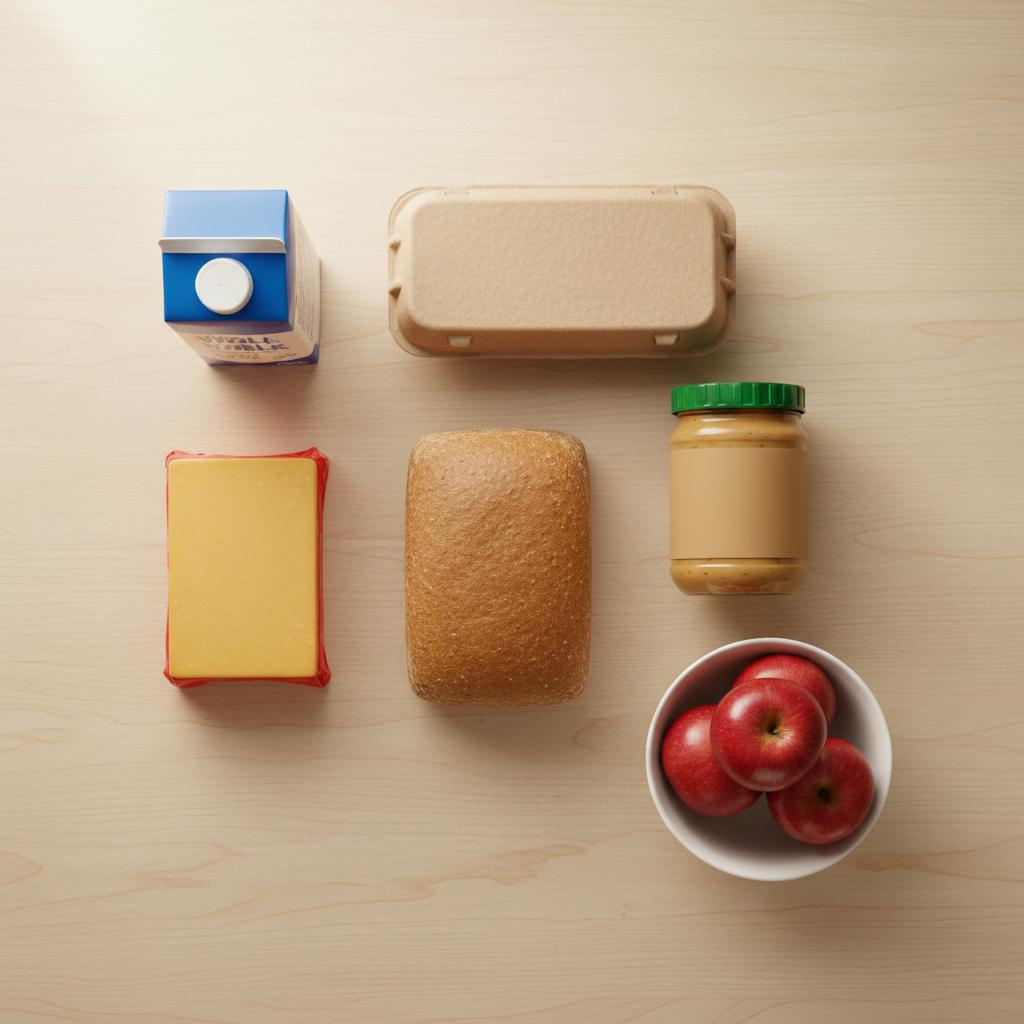
A typical package includes some combination of milk, cheese, eggs, whole-grain bread, breakfast cereal, fruits and vegetables, peanut butter or beans, and canned fish for breastfeeding mothers. Formula-fed infants receive iron-fortified formula, and older infants get baby food. The fruit and vegetable benefit loads onto the WIC card as a set dollar amount.
Beyond food, WIC provides nutrition counseling, breastfeeding support including breast pumps, and referrals to health care. Being on WIC does not reduce your SNAP benefit, and many families receive both at once.
How to apply
You apply through your state or local WIC agency, not through USDA directly. Start at the USDA WIC eligibility page to find your state’s program, or call the USDA WIC line at 1-800-942-3678.
Bring these to your first appointment:
– Proof of income for the last 30 days (pay stubs), or proof you are enrolled in SNAP, Medicaid, or TANF – Proof of identity for yourself and the applying child – Proof of address in the state where you are applying – Proof of pregnancy or the child’s date of birth, depending on the category
The nutritional-risk screening happens at that same visit, usually a quick height, weight, and blood check. Most WIC certifications last from 6 months to a year. Pregnant women are certified through the end of pregnancy plus about 6 weeks after birth.
Why applications get denied or dropped
Most WIC problems are not true denials. They are self-inflicted or avoidable.
– You assumed you earned too much. Check your household size against the table first. Pregnancy and the 185% cutoff push the line higher than most people expect. – You skipped the appointment or came without documents. WIC cannot certify you without the nutritional-risk screening and proof of income and residence. An incomplete file is the number-one reason a case stalls. – You did not recertify. WIC is not permanent. When your certification period ends, you have to reapply, and benefits stop if you miss the window. – Your child turned five. Children age out on their fifth birthday. There is no extension, so plan for the gap.
If your income drops after a denial, reapply. WIC eligibility is checked at the moment you apply, so a job loss or a new pregnancy can make you eligible even if you were over the limit last year.
FAQ
Do I qualify for WIC if I already get SNAP? Yes. Being enrolled in SNAP, Medicaid, or TANF makes you automatically income-eligible for WIC. You still need to fall into a WIC category and complete the nutritional-risk screening, but you will not have to prove your income separately.
What documents do I need to apply for WIC? Bring proof of income for the last 30 days (or proof of SNAP, Medicaid, or TANF enrollment), a photo ID for yourself and the applying child, proof that you live in the state, and proof of pregnancy or the child’s date of birth.
Can fathers or grandparents apply for a child? Yes. Any parent, foster parent, grandparent, or legal guardian can bring an eligible infant or child to WIC and apply on their behalf. The applicant does not have to be the mother.
Does my immigration status affect WIC eligibility? No. WIC does not require U.S. citizenship, and immigration status is not checked for children. Most immigrant families qualify if they meet the income, category, and residency tests.
How long do WIC benefits last? Certification periods usually run from 6 months to a year, depending on your category. Pregnant women are certified through pregnancy plus about 6 weeks postpartum. You must reapply when your period ends, and children age out at their fifth birthday.


Leave a Comment