

6 min read · Last updated July 06, 2026
- The main income limit is 200% of the federal poverty line, which is $31,920 a year for one person and $66,000 for a family of four in 2026.
- If you receive SSI or TANF, you are automatically income-eligible, no matter what your paycheck says.
- Renters qualify, but the landlord must give written permission before any work starts.
- The average job runs around $8,000 per home, paid by the program. You owe nothing back.
In this article
– What the Weatherization Assistance Program is – Who qualifies in 2026 – What the program pays to fix – How to apply – Why applications get delayed or denied – FAQ
Denise Carter, 58, a retired home health aide in Dayton, Ohio, spent about $2,900 last year heating and cooling a poorly insulated house on a fixed income of roughly $1,700 a month. She had heard about “free weatherization” but assumed it was a scam or a loan. It is neither. It is a federal program that would have covered new insulation, sealed her drafts, and likely cut that $2,900 bill by a quarter or more, all at no cost to her.
What the Weatherization Assistance Program is
The Weatherization Assistance Program, run by the U.S. Department of Energy (DOE), is the country’s largest residential energy-efficiency program for low-income households. Federal money flows to each state, and states pass it to local agencies, usually community action agencies, that do the actual work.
The goal is simple: lower your utility bills by making your home use less energy. The program pays for a professional energy audit and then for the upgrades that audit recommends. Unlike LIHEAP, which helps pay a bill you already owe, weatherization fixes the house itself so the bills come down and stay down.
This is not a seasonal, first-come program. It runs year-round, and roughly 35,000 homes are weatherized each year. Because demand is high, most areas keep a waitlist.
Who qualifies in 2026
There are three ways to meet the income test, and you only need to satisfy one.
Path 1: Income at or below 200% of the federal poverty line. This is the DOE standard. For 2026, here is what 200% of the poverty line looks like by household size.
| Household size | 200% of poverty (annual) | Monthly |
|---|---|---|
| 1 person | $31,920 | $2,660 |
| 2 people | $43,280 | $3,607 |
| 3 people | $54,640 | $4,553 |
| 4 people | $66,000 | $5,500 |
Path 2: You already receive SSI or TANF. If anyone in your household gets Supplemental Security Income or Temporary Assistance for Needy Families, your household is automatically income-eligible. You do not have to pass the income table separately.
Path 3: Your state uses the LIHEAP standard. Many states set their weatherization limit at 60% of the state median income, the same threshold used for heating and cooling bill assistance. In a number of states that figure is higher than 200% of poverty, so a household that is slightly “over” on Path 1 can still qualify here.
Both homeowners and renters can apply. Renters simply need the landlord’s written permission before work begins. Priority for the waitlist goes to households with someone age 60 or older, a member with a disability, children in the home, or unusually high energy bills relative to income.
What the program pays to fix
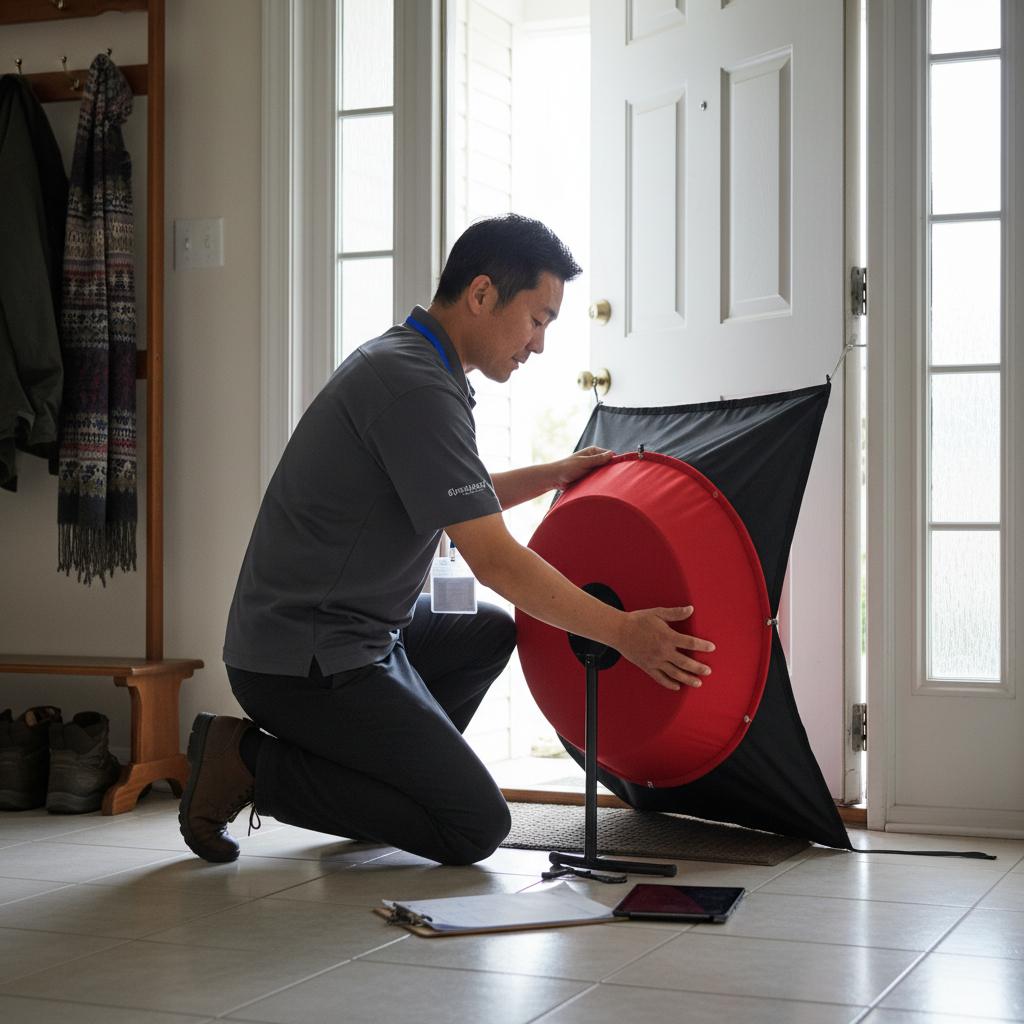
An energy auditor visits first and runs a diagnostic, including a blower-door test that measures how much air leaks out of your home. The auditor then builds a work order of the most cost-effective fixes. Common measures include:
– Attic, wall, and floor insulation – Air sealing and weatherstripping around doors, windows, and ducts – Repair or replacement of an unsafe or failing furnace, boiler, or heat pump – Water heater repairs or a more efficient replacement – Health-and-safety repairs needed to complete the work safely, such as fixing a cracked heat exchanger
DOE sets an average spending limit per home that has run around $8,000 in recent program years and is adjusted annually. Some homes cost less, some more, but you never see a bill. The work is inspected against federal quality standards before the job is closed out.
How to apply
1. Find your state weatherization administrator. DOE keeps a state-by-state map. Your state office directs you to the local agency serving your county. 2. Contact your local provider. This is usually a community action agency. They handle applications, the waitlist, and scheduling. 3. Gather your documents. You will need proof of your prior-year income for everyone in the household. Pay stubs, a Social Security award letter, or benefit letters all work. If you get SSI or TANF, bring that award letter, which shortcuts the income test. 4. Renters: get landlord permission. The provider gives you a form for your landlord to sign. 5. Join the waitlist. Once income is verified, you are placed in line, with priority households moving up.
If you also struggle with the monthly bill itself, apply for utility assistance and LIHEAP cooling help at the same time. Many agencies process both together, and taking the bill assistance while you wait for weatherization does not affect your place in line.
Why applications get delayed or denied
Most people are not denied outright. They stall on one of these:
– Income just over the limit. Before you assume you make too much, check whether your state uses the higher 60% state-median standard, and whether SSI or TANF makes the income table irrelevant for you. – Renter without landlord sign-off. The work cannot start until the owner agrees in writing. Line this up early. – Missing income documentation. An incomplete file goes to the bottom of the pile. Bring every household member’s prior-year proof the first time. – The home was already weatherized. Homes weatherized after September 30, 1994 generally cannot be done again. If your address received work under this program before, ask the agency whether any exceptions apply. – The waitlist. This is not a denial, but it is real. Depending on your area, the wait can run from a few months to more than a year. Priority households are served first.
For a closer look at what the audit itself involves, see our guide to weatherization and home energy audits.
FAQ
Do I qualify if I rent instead of own my home? Yes. Renters are eligible for weatherization. The one added step is that your landlord must sign a permission form before any work starts, since the improvements stay with the property.
What documents do I need to apply? Proof of the prior year’s income for everyone in your household, such as pay stubs, a Social Security or SSI award letter, or unemployment statements. Bring a photo ID and a recent utility bill as well. If you receive SSI or TANF, that award letter alone usually satisfies the income test.
Do I have to pay any of it back? No. Weatherization is a grant, not a loan. There is no repayment, no lien, and no cost to the household for the audit or the approved work.
How long is the waitlist? It varies widely by area, from a few months to over a year. Households with a senior, a person with a disability, young children, or a very high energy burden are moved up the list.
Can I get my home weatherized again if it was done years ago? Usually not. Homes weatherized after September 30, 1994 are generally not eligible for a second round. Ask your local agency whether any narrow exceptions apply to your situation.


Leave a Comment