

Energy bills are one of the most persistent financial pressures facing households across the United States. For families on fixed incomes, renters navigating rising utility costs, and individuals who have experienced a sudden loss of income, the Low Income Home Energy Assistance Program, known as LIHEAP, exists specifically to help. It is one of the most widely available federal energy assistance programs in the country, yet millions of eligible households never apply simply because they are not sure how the process works.
This guide walks you through the application process from start to finish so you know exactly what to expect and how to prepare.
What LIHEAP Covers
LIHEAP is a federally funded program administered at the state level that provides financial assistance to low-income households struggling to pay their heating and cooling costs. Depending on your state, the program may cover a portion of your electric or gas bill, help you avoid a utility shutoff, or fund emergency assistance when your heat or cooling has already been disconnected.
Some states also use LIHEAP funds to cover weatherization improvements that reduce your energy use over the long term, such as insulation, weather stripping, and furnace repairs. The specific benefits available vary by state and by the funding available in a given program year.
Who Qualifies
Eligibility for LIHEAP is based primarily on household income relative to the federal poverty level or your state median income, whichever is higher. Most states set the income limit at or below one hundred fifty percent of the federal poverty level, though some states extend eligibility higher. Household size is factored into the calculation, so a larger household qualifies at a higher income threshold than a smaller one.
Priority is typically given to households that include members who are elderly, disabled, or under the age of six, as these groups face the greatest health risk from extreme temperatures. Being in a priority category does not mean other households are turned away. It means priority applicants are served first when funding is limited.
Step One: Find Your Local LIHEAP Office
LIHEAP is not administered at the federal level. It flows through state energy offices and is distributed to local community action agencies and nonprofit organizations that process applications directly. The first step is finding the office that serves your county or city.
The National Energy Assistance Referral project maintains a hotline at 1-866-674-6327 that connects callers to their local LIHEAP office. The LIHEAP clearinghouse website also maintains a state-by-state directory. Your state’s department of health and human services or community services office is another reliable starting point.
Step Two: Gather Your Documents
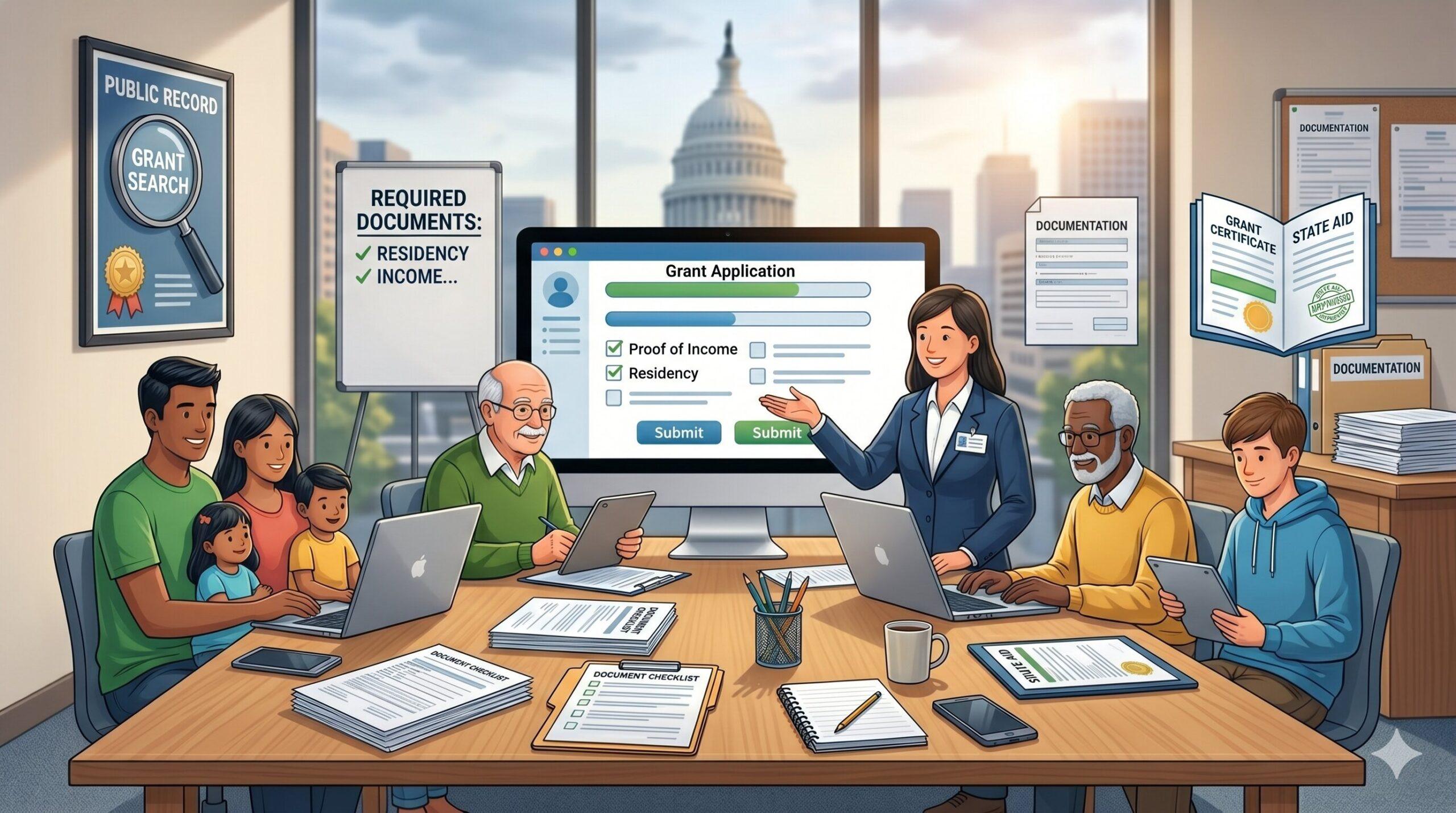
Most LIHEAP applications require a standard set of documents. Bring proof of identity for all household members, such as a driver’s license, state ID, or birth certificate. You will need proof of income for everyone in the household who has earnings, including pay stubs, Social Security award letters, or documentation of any other income sources. A copy of your most recent utility bill is required so the program can identify your account and the amount owed. Proof of your current address, such as a lease agreement or a piece of official mail, is also typically required.
Gathering these documents before your appointment prevents delays and ensures your application moves forward without unnecessary follow-up requests.
Step Three: Submit Your Application
Depending on your state and local office, applications may be submitted in person, by mail, by phone, or online through a state benefits portal. In-person applications are often the fastest because a caseworker can review your documents on the spot and flag any issues immediately. Online applications are increasingly available and convenient, though some states still require in-person document verification.
After submitting, you will receive a confirmation and a case number. Keep this information somewhere accessible. Processing times vary by state and the volume of applications being handled, but most offices process applications within two to four weeks.
Step Four: Follow Up and Understand Your Benefit
Once approved, LIHEAP benefits are typically paid directly to your utility company rather than to you. Your account receives a credit, and your next bill reflects the reduction. In emergency situations where service has been disconnected, the payment is often expedited.
If your application is denied, you have the right to appeal. Ask the office for the denial reason in writing and request information about the appeals process. Common reasons for denial include income slightly above the threshold, missing documentation, or a funding gap in your state’s program for that period. If funding is the issue, ask to be placed on a waiting list for the next funding cycle.
Apply Early Every Year
LIHEAP funding is allocated annually and in many states runs out before the heating or cooling season ends. Applying as early as possible in the program year, typically in the fall for heating assistance and early summer for cooling assistance, gives you the best chance of receiving a benefit before funds are exhausted.
For a broader look at the state-level programs that complement LIHEAP and cover rent alongside utility costs, state-specific relief programs for rent and household bills provides a useful companion guide to additional assistance available in your area.

Leave a Comment